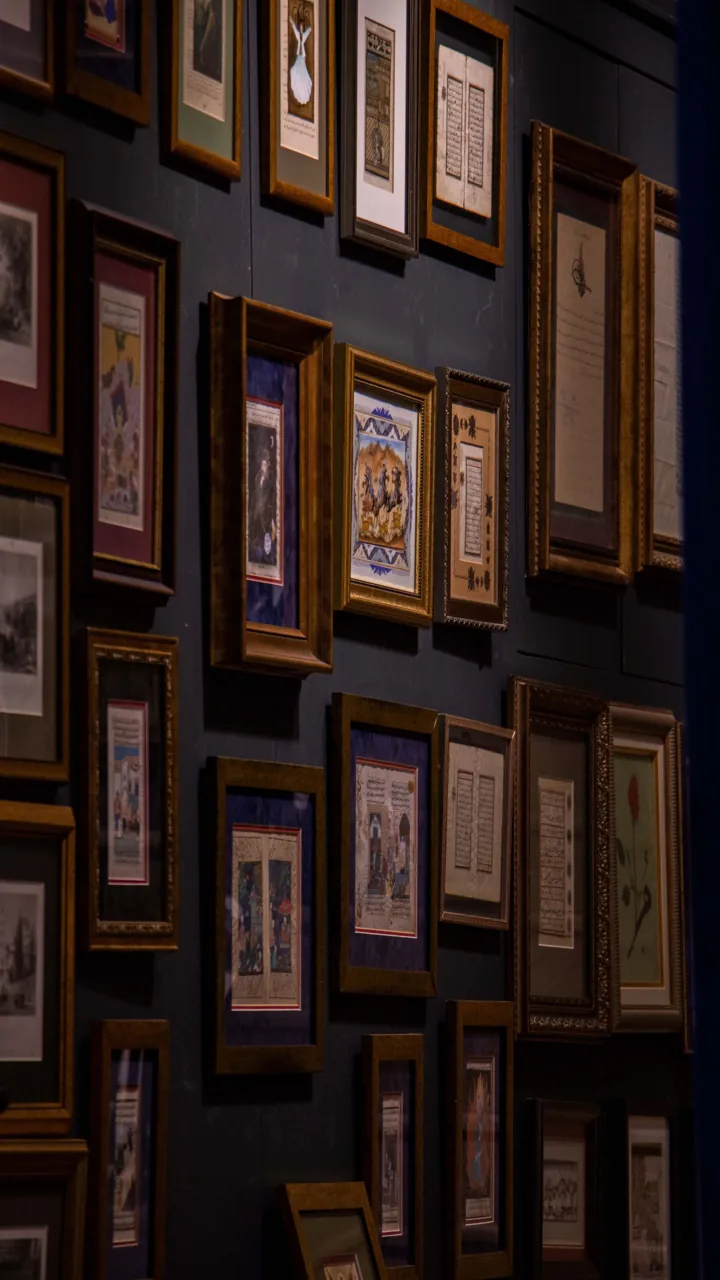
Most people walk through an exhibition without ever wondering why the pictures sit exactly where they do. That invisibility is the whole point. A well-hung show feels effortless and natural, as though the works simply belong on those walls. In reality, the hang is one of the most laboured decisions in the entire process, and institutions from small artist-run spaces to giants like MoMA agonise over it for weeks.
The line and the rhythm
The first decision is the centre line — the height at which the middle of each work sits. Galleries traditionally aim for around 145 to 150 centimetres, roughly average eye level, so that visitors are not forced to crane up or stoop down. Keeping that line consistent across differently sized pieces gives a room its quiet sense of order, even when the works themselves are wildly varied.
Then there is rhythm. Curators think about how one piece leads to the next, where the eye should pause and where it should hurry on. A dense cluster builds energy; a single work alone on a large wall demands reverence. Spacing is pacing. Hang two loud paintings side by side and they fight; give each its own breathing room and both grow stronger.
Light, sequence and the story
Lighting is adjusted work by work, angled to reveal texture without throwing glare or harsh shadow. Sequence matters too — the order in which you encounter pieces shapes the argument the show is making, the same way paragraphs shape an essay. A good curator is, in effect, writing with objects in space.
None of this announces itself. When a hang succeeds, visitors simply feel that the show flows, that it makes sense, that it was somehow always meant to look this way. That seamlessness is the curator's signature — an authorship you are meant never to notice.