For most of the twentieth century, the story of type was a story of speed. Hand-set metal gave way to hot-metal machines, which gave way to phototypesetting, which gave way to the desktop computer. Each step made setting words faster and cheaper, and each step pushed the previous craft a little closer to the museum. By the 1990s, hand-set letterpress looked finished — a beautiful relic with no commercial future.
Why it came back
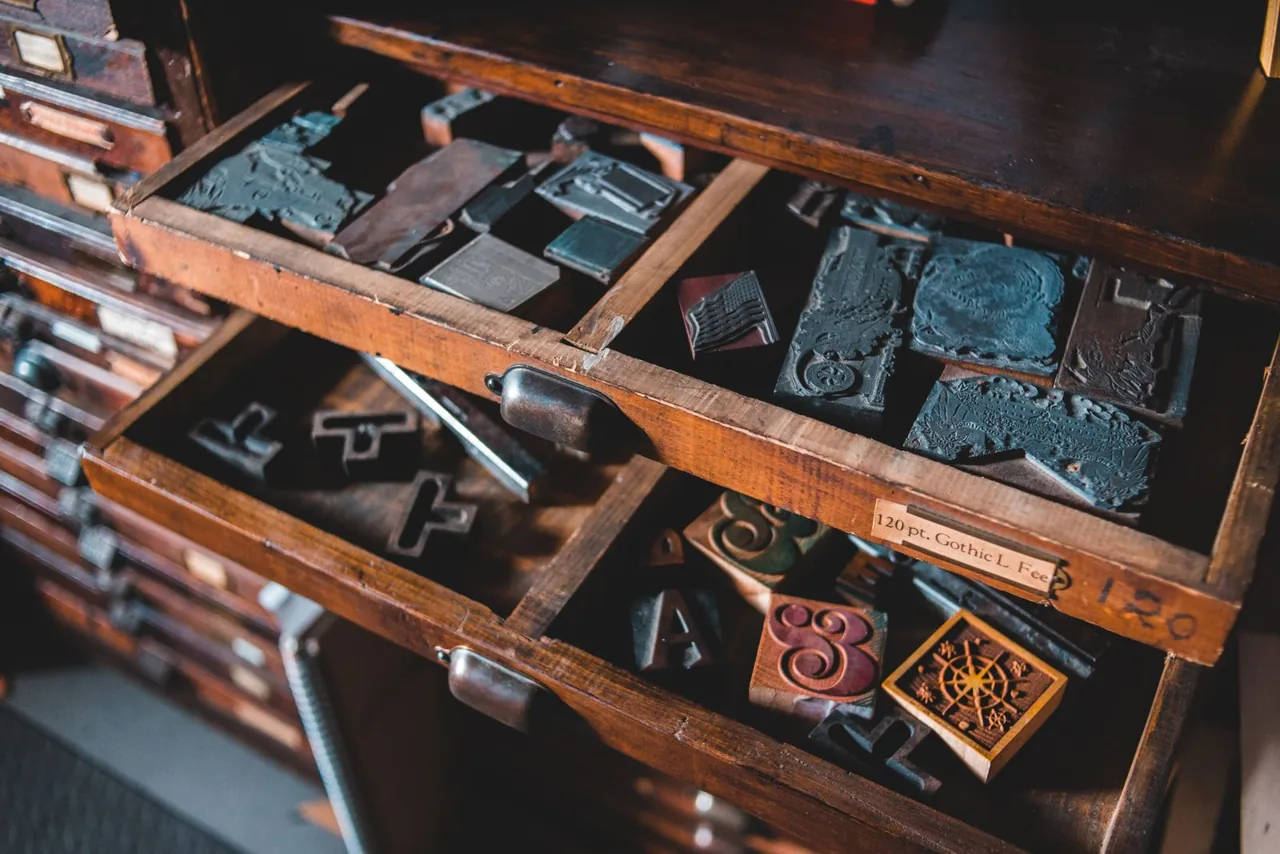
And yet the cases of metal and wood type never quite went to the scrapyard. A stubborn community of printers kept them, learned them and eventually taught them to a younger generation that had grown up entirely on screens. To someone who has only ever set type by dragging a slider, the physical act of choosing each letter from a drawer and locking it into a frame is revelatory. You feel the weight of the words. You cannot undo with a keystroke; a mistake means re-setting the line.
That friction, paradoxically, is the appeal. Hand-setting forces slowness and attention. You think harder about every line break and every space because each one costs effort. The result tends to be more considered than work knocked out at speed — and the impression of inked metal pressed into soft paper has a tactile depth no laser printer can fake.
A living craft
Today letterpress occupies an interesting niche. It is no longer how books get made, but it thrives in wedding stationery, fine-press editions, posters and the kind of small print runs where the object itself is the point. Workshops sell out months in advance. Type foundries that nearly closed are casting new fonts again.
The lesson is not that old ways are always better. It is that when a craft is reduced to pure efficiency, something is quietly lost — and sometimes a generation comes along that decides to go and find it.